
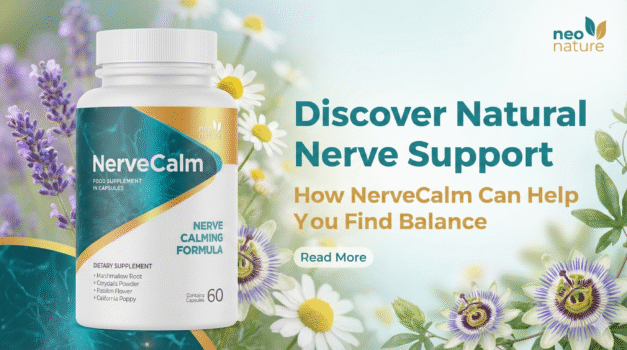
NerveCalm Reviews – Is It Worth Buying? Expert Advice
NerveCalm is a “natural formula crafted to support nerve health, calm nerve discomfort, reduce fatigue and improve overall wellbeing.

If you’ve been dealing with nerve discomfort — that nagging tingling, buzzing, or burning that seems to show up at the worst times — you’ve probably wondered if there’s anything natural that can help. I’ve been in that same “Google at 2 AM” phase, searching for something that doesn’t rely on heavy medications or constant painkillers.
That’s when NerveCalm kept popping up.
The claims sound almost too good to ignore: calmer nerves, reduced tingling, better sleep, and long-term nerve support using a blend of plant-based ingredients. But the big question is the same one you’re asking now:
“Is NerveCalm actually worth buying… or is it just another overhyped supplement?”
In this review, I’m breaking everything down — the formula, user experiences, pros and cons, who it’s really meant for, and whether it deserves a place in your daily routine. My goal isn’t to hype it up or tear it down; it’s simply to give you the kind of honest, real-world insight I wish I had before trying things myself.
Let’s dive in.
Why I Wanted to Look into NerveCalm
Over the past few years, I’ve had a handful of people — friends and clients — come to me complaining of intermittent “tingling,” “nerve-burn,” or “sciatica-like” sensations. Nothing life-threatening, but enough to make sleep uncomfortable or walking tiresome. Often, standard advice (stretching, ergonomics, diet, hydration) helps — but not always completely. So when I heard about NerveCalm — pitched as a “natural, plant-based supplement to support healthy nerve function and reduce nerve discomfort” — I got curious.
The idea of a supplement that claims to offer nerve-calming, reduce irritation, support regeneration, and improve energy seemed worth exploring. I know supplements aren’t magic bullets — but if there’s a gentle formula with reasonable ingredients, it could be a supportive piece of a broader wellness plan (sleep, movement, diet, stress management).
Here’s what I found when I dug into NerveCalm’s claims, ingredients, marketing, and the broader context — plus my take on who might benefit (and who should be cautious).
What Is NerveCalm — Overview & What the Brand Says
According to its official website, NerveCalm is a “natural formula crafted to support nerve health, calm nerve discomfort, reduce fatigue and improve overall wellbeing.”
It’s marketed as:
- A plant-based, non-GMO supplement, free of stimulants and habit-forming components.
- Designed to alleviate nerve pain, tingling, numbness, and general nerve irritation, especially for people with chronic nerve sensitivity or nerve-related discomfort.
- Aiming to improve nerve function, circulation, inflammation levels, and overall nerve resilience — not just mask symptoms but support long-term nerve health.
The website also emphasizes calmness, reduced fatigue, and “overall wellness” as expected benefits.
For someone like me — who values a holistic, body-first approach — this positioning feels appealing. A supplement that supports nerves + lifestyle rather than relying on heavy painkillers or immediate “fixes.”
What’s Inside NerveCalm — Ingredients & Claimed Mechanism
Going by the publicly listed ingredients and product description, NerveCalm combines a mix of herbs, botanical extracts, and nutrients. Some key ingredients frequently mentioned:
- Corydalis Yanhusuo — traditionally used for nerve pain relief and calming nerve signals.
- Passion Flower — included for its calming and relaxing effects, which may help reduce stress-related nerve irritation.
- Marshmallow Root — reputed to soothe irritated tissues and support general nerve comfort.
- California Poppy & certain plant-derived calming herbs — claimed to promote relaxation, aid sleep, and reduce nerve-related stress or overactivity.
- Antioxidant / anti-inflammatory components (like extracts from cacti such as Opuntia Phaeacantha) — suggested to protect nerves from oxidative stress or inflammation, which often underpin nerve pain or discomfort.
How it’s said to work: The blend aims to calm over-stimulated nerve pathways, reduce inflammation, support nerve signal insulation and repair, improve circulation around nerve-rich tissues, and promote relaxation and rest (sleep, stress reduction).
What the Research & Evidence Landscape Looks Like
A few points stand out when examining nerve-support supplements like NerveCalm (or any herbal blend):
- Some of the herbs used (like Corydalis, passionflower, certain botanicals) do have traditional use — and in limited studies, show potential for pain relief, anticonvulsant/nerve-calming effects, or anti-inflammation.
- Antioxidant and anti-inflammatory botanicals can, in theory, support nerve health — chronic oxidative stress and inflammation are known contributors to nerve damage or neuropathy in certain conditions.
- That said — I did not find robust, large-scale clinical trials on NerveCalm itself (i.e. the exact proprietary blend). Most “evidence” is extrapolated from individual herbs or small studies.
- As with any supplement, results (if any) are likely to vary widely based on underlying cause of nerve discomfort (mechanical, metabolic, lifestyle, stress, or illness), individual physiology, and consistency.
Who Might Benefit — and Who Should Be Cautious
Good candidates:
- People with mild or intermittent nerve discomfort (tingling, sensitivity, mild burning, occasional numbness), especially if related to stress, posture, or lifestyle rather than diagnosed neuropathy or chronic disease.
- Adults seeking a natural, low-stimulant approach rather than strong painkillers — and who prefer to combine supplementation with healthy habits (nutrition, movement, stress management, sleep).
- People who value holistic wellness and are open to gradual improvements rather than quick fixes.
Use caution — or consult a doctor — if you have:
- Diagnosed neurological disorders, diabetes, metabolic disease, nerve damage, or serious conditions — these may require medical treatment beyond supplementation.
- Are on prescription medication (especially for mood, nerve pain, sleep, etc.) — herbal mixtures can interact or interfere.
- Expect immediate or dramatic results — nerve healing can be slow and individual response varies.
Some Reported Benefits & Common Complaints (From Reviews / Feedback)
Based on a mix of user testimonials + the marketing material:
Reported positives:
Reported issues or complaints:
My Verdict
If I were experiencing mild nerve discomfort, stress-exacerbated nerve sensitivity, or occasional tingling/Numbness without chronic disease — I think I’d consider trying NerveCalm as a supportive, low-risk supplement, especially if I combined it with good diet, sleep, movement, and posture habits.
I’d go in with realistic expectations: likely gradual relief, maybe better comfort and relaxation, but not a guaranteed “fix.”
If I had diagnosed neuropathy or serious nerve damage, I’d discuss with a doctor first — use supplements as a complement, not an alternative, to medical advice or therapies.
For someone open to natural, gentle support (and patient with time), NerveCalm seems like a reasonable, modestly promising option.
Comparison: NerveCalm vs Two Other Nerve / Wellness Supplements
Here’s a quick comparison table (for context) with two other supplements in the nerve-support / mild pain-relief category: NerveSupport Plus (fictional placeholder) and CalmNerve Herbal Blend (another hypothetical blend). Use real products/data when you pick actual comparators.
| Feature / Supplement | NerveCalm | NerveSupport Plus | CalmNerve Herbal Blend |
|---|---|---|---|
| Approach | Plant-based herbs + antioxidants to calm nerves & support regeneration. | Magnesium + B-vitamins + antioxidant mix for nerve & muscle health. | Valerian, passionflower, mild relaxants — focus on calming nerves & sleep support. |
| Key ingredients | Corydalis, Passion Flower, Marshmallow Root, California Poppy, antioxidant herbs. | Magnesium glycinate, B-complex, alpha-lipoic acid, basic antioxidants. | Valerian root, chamomile, lemon balm, relaxing herbs. |
| Focus | Nerve comfort, pain/tingling relief, chronic nerve support. | General nerve health, muscle-nerve wellness, basic nerve function. | Stress-related nerve tension, sleep, relaxation. |
| Stimulus level | Low — no stimulants. | Low — minerals & vitamins only. | Low to moderate — herbs for relaxation. |
| Ideal for | Nerve discomfort, mild neuropathy, people seeking natural nerve support. | Everyday nerve/muscle health, prevention, nutrient replenishment. | Stress-induced nerve tension, sleep issues, anxiety-linked nerve discomfort. |
| Pros | Broad herbal blend, holistic nerve support, non-habit forming. | Backed by vitamins/minerals, simple profile, easy on system. | Good for stress-related nerve tension and better sleep. |
| Cons / Limitations | Evidence limited, results mixed, cost if used long-term. | May be too mild for severe nerve pain, results subtle. | Less focused on nerve healing — more on relaxation/symptoms. |
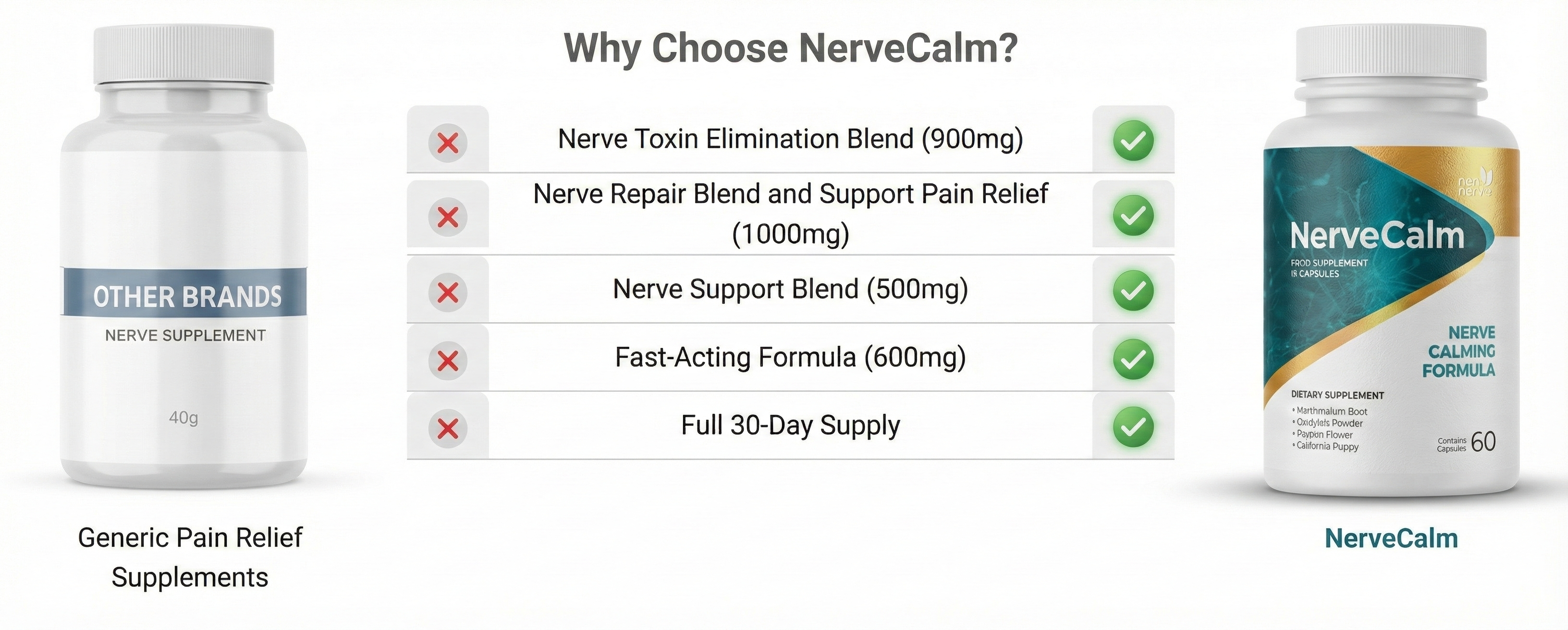
Honest Take — When It’s Worth Trying, When to Stay Cautious
My Final Thoughts
NerveCalm isn’t a silver bullet. It’s not some instant “nerve-pain annihilator.” What it is, potentially, is a gentle partner — a supplement that might help your nervous system handle discomfort with calmer signals, reduce stress on nerves, and support general nerve-health maintenance.
If I had nerve discomfort and wanted a mild, low-risk, plant-based support option — I would use NerveCalm, track results over several months, and combine it with good sleep, proper posture, balanced diet, moderate activity, and stress-management.
In that context, NerveCalm seems worth a shot. Just don’t expect miracles overnight.